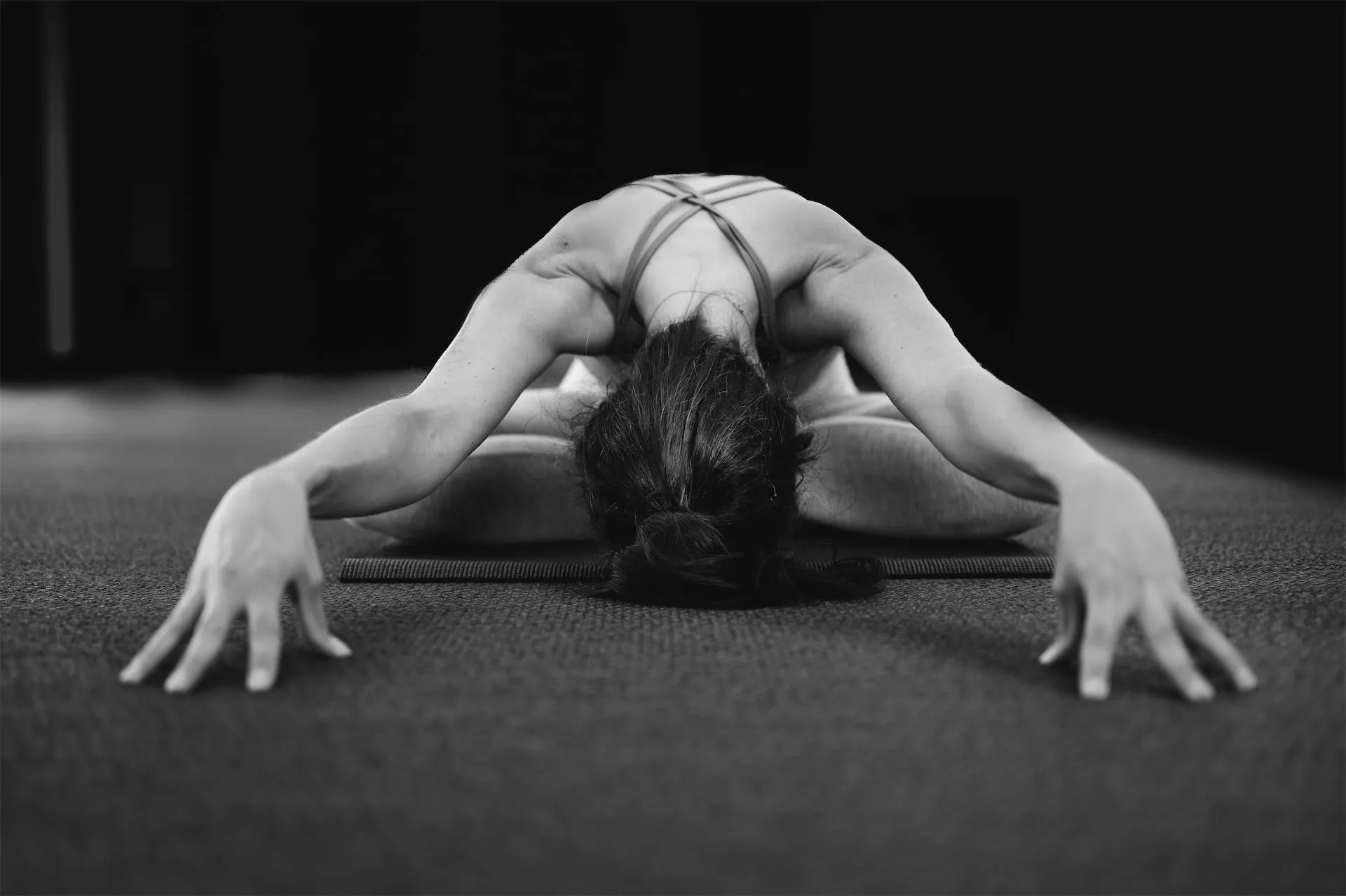
Why Yin Yoga Is Worth Trying Even If It Sounds Too Slow
Yin yoga tends to have an image problem.
Students who are new to it often assume it’s the easy class — the one for people who don’t want a real workout, or the one to attend when you’re injured and can’t do anything else. Then they actually try it, spend five minutes in a hip opener that reveals tension they didn’t know they were carrying, and quietly rearrange their whole opinion of what a challenging practice can look like.
Yin is not gentle yoga in disguise. It’s a completely different discipline with a different target, a different mechanism, and different results. Understanding why it works makes it a lot easier to stick with — especially on the days when staying still feels like the hardest thing on the schedule.
What Yin actually targets
Most yoga — Vinyasa, Hatha, Power — works primarily with muscle tissue. Muscles respond well to repeated, rhythmic engagement. They warm up, contract, lengthen, and recover. This is the kind of practice most people picture when they think about yoga.
Yin works with connective tissue instead: the fascia, ligaments, tendons, and joint capsules that support and connect the body’s deeper structures. These tissues are dense and largely avascular — meaning they have limited blood supply and don’t respond to the same short, rhythmic loads that muscle tissue does.
To create change in connective tissue, you need sustained, moderate stress applied over time. That’s exactly what a long-held Yin pose delivers. Three to five minutes in a hip fold or a spinal twist isn’t rest — it’s the specific stimulus the deeper layers of the body need to maintain and gradually expand their range.
Why it’s harder than it looks
Most people can settle into a Yin pose within the first sixty seconds. The first two minutes are generally fine. Somewhere around the two-and-a-half or three-minute mark, things get interesting.
The sensation deepens. The mind starts suggesting that you’ve been here long enough and could probably move now. The body looks for a way out — a subtle weight shift, a micro-adjustment that takes some of the intensity off.
The practice of Yin is learning to recognize that impulse and stay anyway — not by forcing or gritting through pain, but by softening further into the pose and returning attention to the breath. It’s a form of patience that most of us genuinely need to practice.
This is also why Yin tends to surface emotional responses in students more often than other styles. Long holds in the hips and pelvis — areas where the body tends to hold chronic tension — can bring up feelings that have been sitting beneath the surface. This is considered a normal part of the practice, not something to be alarmed by.
What changes with regular Yin practice
Students who practice Yin consistently tend to notice a few things over time.
The first is physical: a gradual, lasting increase in range of motion, particularly in the hips, lower back, and inner thighs — areas that are chronically restricted in people who sit for most of the day.
The second is more subtle: a general decrease in the background tension that most people carry without realizing it. The kind of tightness that isn’t painful enough to address but costs energy all day and makes the body feel older than it is.
The third is something that’s harder to articulate but students consistently mention: a changed relationship with discomfort. Learning to stay present with sensation in a Yin class — not to fight it, not to escape it, but to observe it and breathe through it — turns out to be a skill that carries into the rest of life.
How to approach your first Yin class
Come without expectations about what it should feel like. It won’t feel like a workout in the way you’re used to. That’s fine.
Use props freely. Blocks under the knees in a hip fold, a bolster under the spine in Supported Fish, a blanket under the hips in Sleeping Swan — props aren’t cheating; they let you reach the right depth for your body without gripping or compensating.
Set a gentle intention to stay for the hold. When the mind starts negotiating, notice that, and return to the breath. You don’t have to succeed at this every time. Just practicing the return is the point.
And if you fall asleep in Savasana, that’s information too. Your body needed it.
Our Yin class runs every week — check the schedule for current times, or reach out if you have questions about whether it’s a good fit for you.